Ambiguous prompts produce confidently wrong answers because AI guesses instead of asking.
← Back to patterns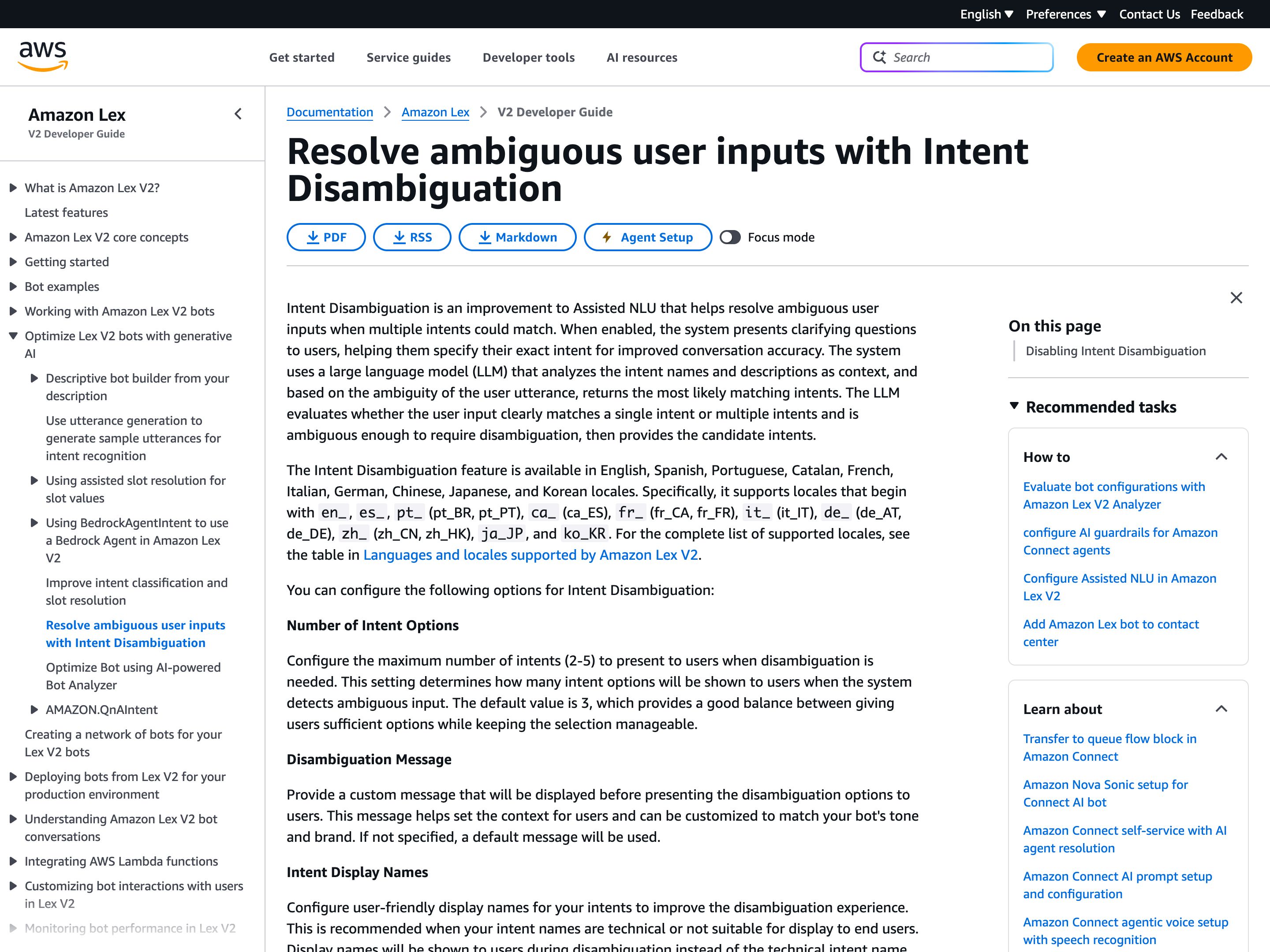
Information Foraging with Generative AI
Trust & Verification
EmergingDisambiguation Branch
Surface Multiple Readings of Ambiguous Intent
When the AI is unsure what you meant, it surfaces 2-3 concrete interpretations side by side with previews. You pick the right reading before any work runs — no wasted output, no mid-correction.
Metaphor
Forked Path
Interaction
Branch Selection, Preview
Use case
Ambiguous Queries, Multi-meaning Tasks, Search
Failure mode
Linear History
Control mechanisms
Variant Cards · Inline Preview · Confirm Path
Reference examples
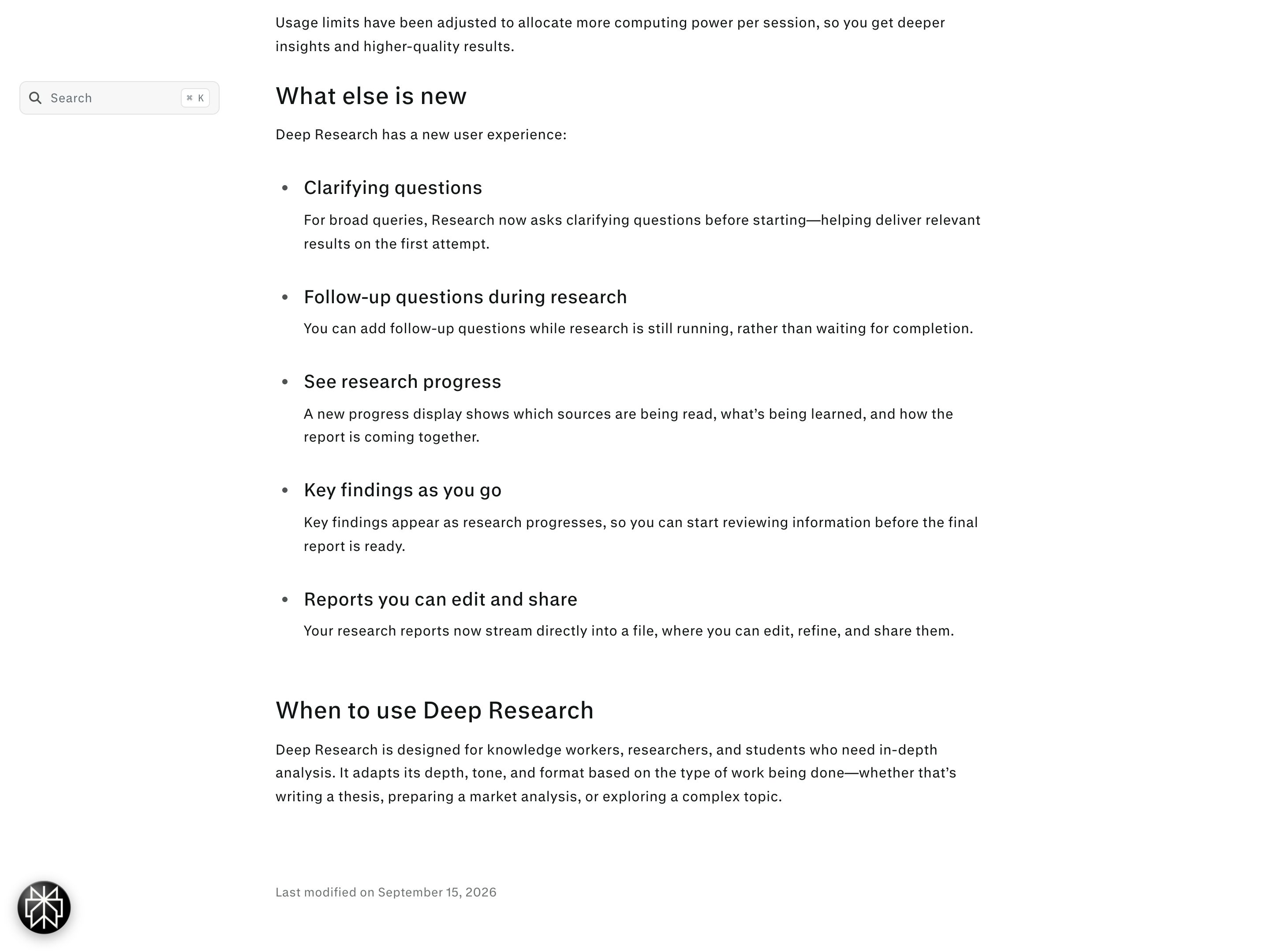
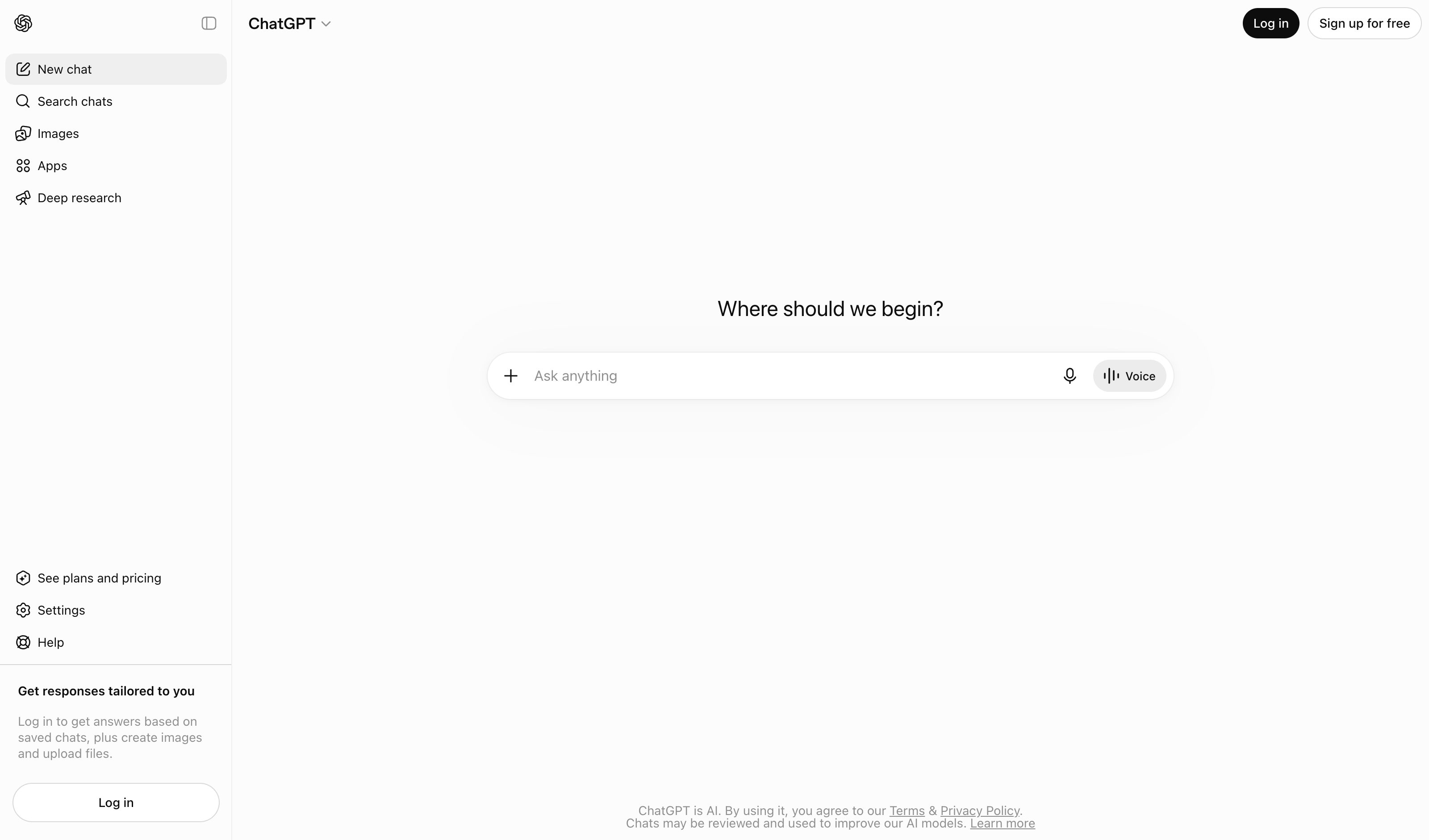
Amazon Lex Intent Disambiguation · Perplexity Deep Research clarifying questions · ChatGPT Deep Research clarification
Interactive Example
The live side-by-side is the comparison.
This prototype already contains the contrast between chat and the pattern response. It stands as the primary comparison surface for this page.
Ambiguity is a fork in the road. Chat treats it as a guess.
When a prompt admits two readings, chat silently picks one and commits the full cost of being wrong before you ever see the misread. The confident answer arrives, you realise it solved the other interpretation, and now you are correcting after the work instead of before it. The misunderstanding is only visible once it is expensive.
Disambiguation Branch surfaces the two or three plausible interpretations side by side, each labelled with its underlying assumption and previewed with a sample output, so you pick the right reading before any work runs. Choosing replaces correcting, and the assumption that would have caused the error becomes a thing you select rather than discover. The cheapest fix is the one made before generation.
An interface that shows you its interpretations spends a moment of your attention to save you a wrong answer.
DOPE Lens
How this pattern improves AI interaction quality.
Observability
Ambiguity surfaces as visible branches, not silent assumption
Directability
Pick a branch, refine it, or write your own interpretation
Predictability
Each branch shows a sample output before commitment
Explainability
Each branch is labeled with the assumption that produces it
Fit
Where it earns its place.
Use it
when
when
Prompts are often ambiguous and the cost of guessing wrong is higher than asking.
Avoid
when
when
Intent is unambiguous or the cost of running and correcting is lower than upfront review.
In the wild
Where this pattern already ships.
The pattern is shipping but still maturing across products. Entries below show how different teams have approached it; expect variation as the space settles.
Amazon Lex Intent Disambiguation
Amazon
With Intent Disambiguation switched on in a bot's Assisted NLU settings (it is off by default), Amazon Lex's LLM stops on an utterance that fits several intents and offers the likeliest ones to pick from before routing. In AWS's Nov 2025 announcement, "I need help with my flight" becomes a choice between checking status, upgrading or changing the flight. The builder caps the readings at 2–5 (default 3), writes the message that introduces them and can give each intent a display name. Each reading appears as a name only (the display name or the intent name), with no preview of what it would do.
Visit Amazon ↗
Perplexity Deep Research clarifying questions
Perplexity
Since the Advanced Deep Research update (February 2026), Perplexity's Deep Research mode asks clarifying questions before it starts on a broad query. The help article describes questions, not competing readings laid out side by side for you to pick from.
Visit Perplexity ↗
ChatGPT Deep Research clarification
OpenAI
Before a deep research run, ChatGPT may ask clarifying questions to confirm your goals, and proposes a research plan you can review and edit before research begins (added 10 Feb 2026); mid-run you can interrupt to refine the focus. It settles one reading through questions and an editable plan; OpenAI's docs describe no step that sets competing readings side by side to pick from.
Visit OpenAI ↗
Research Frame
Why this pattern exists, and where it breaks.
Surface 2-3 plausible interpretations as branches; let the user pick before work begins.
Chat collapses ambiguity into a single answer and only reveals the misread after execution.
Excessive branching for trivial ambiguity adds friction and trains users to dismiss it.
Common questions
What people ask about this pattern.
When should I use the Disambiguation Branch pattern?
+
Prompts are often ambiguous and the cost of guessing wrong is higher than asking.
When should I avoid the Disambiguation Branch pattern?
+
Intent is unambiguous or the cost of running and correcting is lower than upfront review.
What problem does Disambiguation Branch solve?
+
Ambiguous prompts produce confidently wrong answers because AI guesses instead of asking.
Why is chat the wrong fit for this?
+
Chat collapses ambiguity into a single answer and only reveals the misread after execution.
Grounded in Research
Not just opinion.
The papers, guidelines, and usability studies this pattern rests on.
Raluca Budiu, Feifei Liu, Emma Cionca, Amy Zhang
Nielsen Norman Group · 2023
Diary study of real chatbot use: only ~4% of turns include a clarifying question and only ~22% of AI answers get fact-checked — the empirical backbone for asking-before-guessing and for making verification cheap enough to actually happen.
Related Patterns
Curated connections, not just neighbors.
Hand-picked relationships — what this pattern pairs with in practice, what it replaces, what it builds on, and what builds on it.
Often paired with
Parallel Alternatives
Once Disambiguation Branch has your reading, Parallel Alternatives shows distinct takes on it to compare or blend.
Often paired with
Confidence Signals
Disambiguation Branch settles what you meant before the run; Confidence Signals show how well each claim holds up after.
Alternative to
Ghost Text Editor
Ghost Text Editor bets on one guess you can type past; Disambiguation Branch asks first when a misread costs a whole run.