Users cannot challenge conclusions they cannot inspect.
← Back to patterns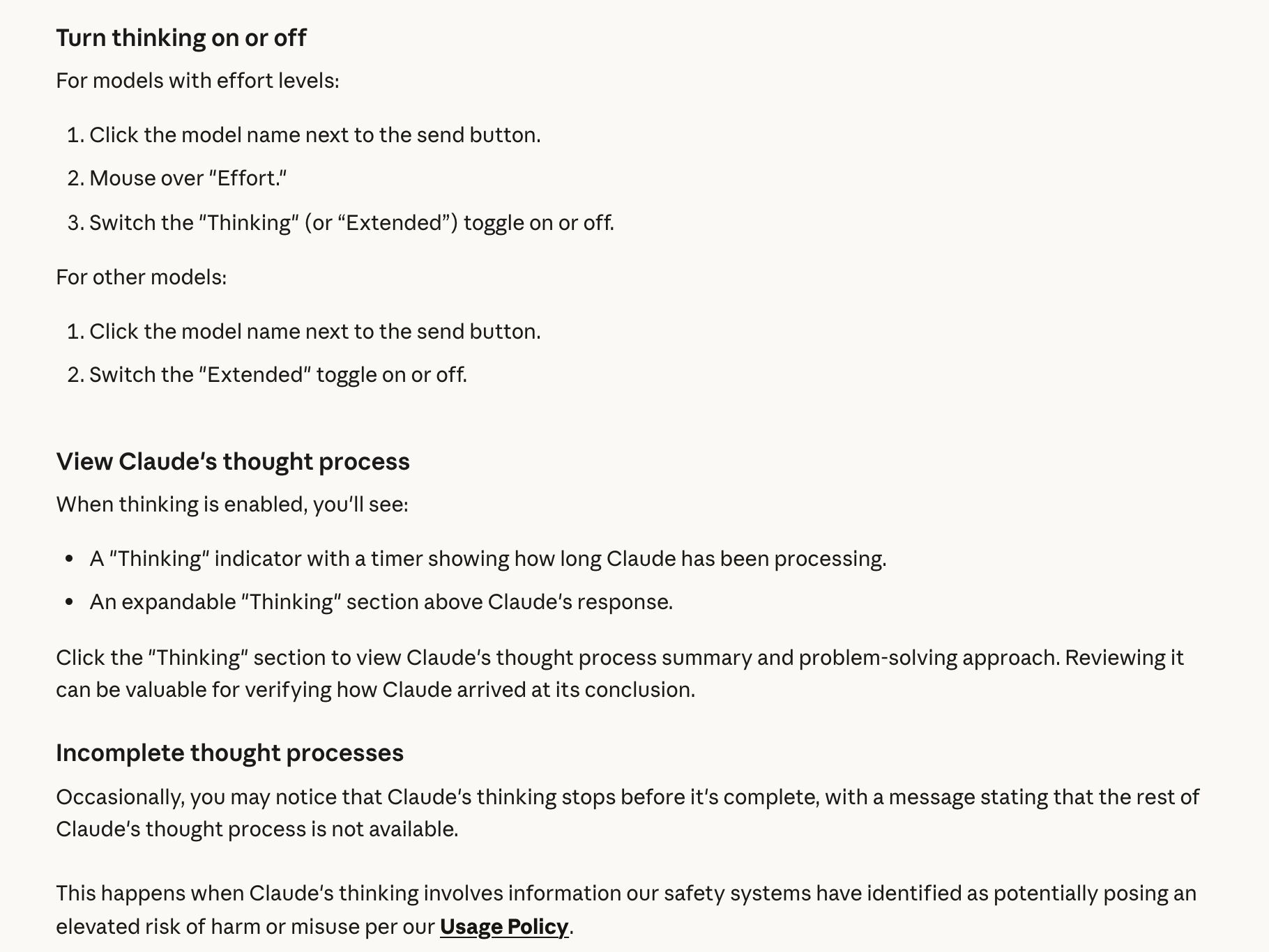
Guidelines for Human-AI Interaction (HAX Toolkit, G1-G18) Explainable AI in Chat Interfaces
Trust & Verification
EmergingReasoning Trace
Making the Machine's Thinking Visible
Instead of a flat confident-sounding answer, the AI exposes its reasoning as a collapsible tree. Each claim links back to the assumptions, data points, and inferences that produced it. Users see not just what the AI concluded, but why — and where uncertainty lives.
Metaphor
X-Ray
Interaction
Expandable, Tree
Use case
Research, Decision Support, Complex Analysis
Failure mode
Hidden State
Control mechanisms
Decision Tree · Confidence Nodes · Expand/Collapse
Reference examples
Claude Thinking · ChatGPT Reasoning Panel · DeepSeek Thinking Mode
Interactive Example
The live side-by-side is the comparison.
This prototype already contains the contrast between chat and the pattern response. It stands as the primary comparison surface for this page.
A confident answer hides its own weak points. A visible one offers them up.
Chat collapses a chain of assumptions and inferences into a single authoritative-sounding paragraph. The problem is not that the answer might be wrong; it is that you cannot challenge a conclusion you cannot inspect. The smoother the prose, the harder it is to find where to push back.
Reasoning Trace exposes the chain as a navigable tree, with each claim linked to the data and assumptions that produced it. Low-confidence branches are flagged rather than buried, so attention flows to where the uncertainty actually lives. Inspection becomes targeted instead of all-or-nothing.
An answer you can audit is worth more than an answer you have to trust.
DOPE Lens
How this pattern improves AI interaction quality.
Observability
The full reasoning chain is visible, not hidden behind a confident summary
Directability
Low-confidence branches invite targeted correction or deeper research
Predictability
Consistent node structure makes reasoning auditable and comparable
Explainability
The full decision chain is exposed with assumptions explicitly flagged
Fit
Where it earns its place.
Use it
when
when
Conclusions need to be challengeable — research, decisions, audits — not just produced.
Avoid
when
when
The task is lightweight and explanation cost exceeds decision cost — or the reader is not answerable for the result and cannot evaluate the chain, where visible machinery reads as instability rather than rigor.
In the wild
Where this pattern already ships.
The pattern is shipping but still maturing across products. Entries below show how different teams have approached it; expect variation as the space settles.
Claude Thinking
Anthropic
Thinking is a toggle under the model name → Effort, separate from the effort level, though it cannot be switched off on Opus 5.5, Sonnet 5.5, Haiku 5.5, Fable 5.1 or Opus 5. A "Thinking" indicator with a timer runs while Claude works, and an expandable "Thinking" section above the answer holds a summary of the reasoning, never the raw chain. Anthropic names that summary as one of its anti-distillation measures. When safety systems flag the reasoning, the trace stops part-way with a message that the rest is not available.
Visit Anthropic ↗
ChatGPT Reasoning Panel
OpenAI
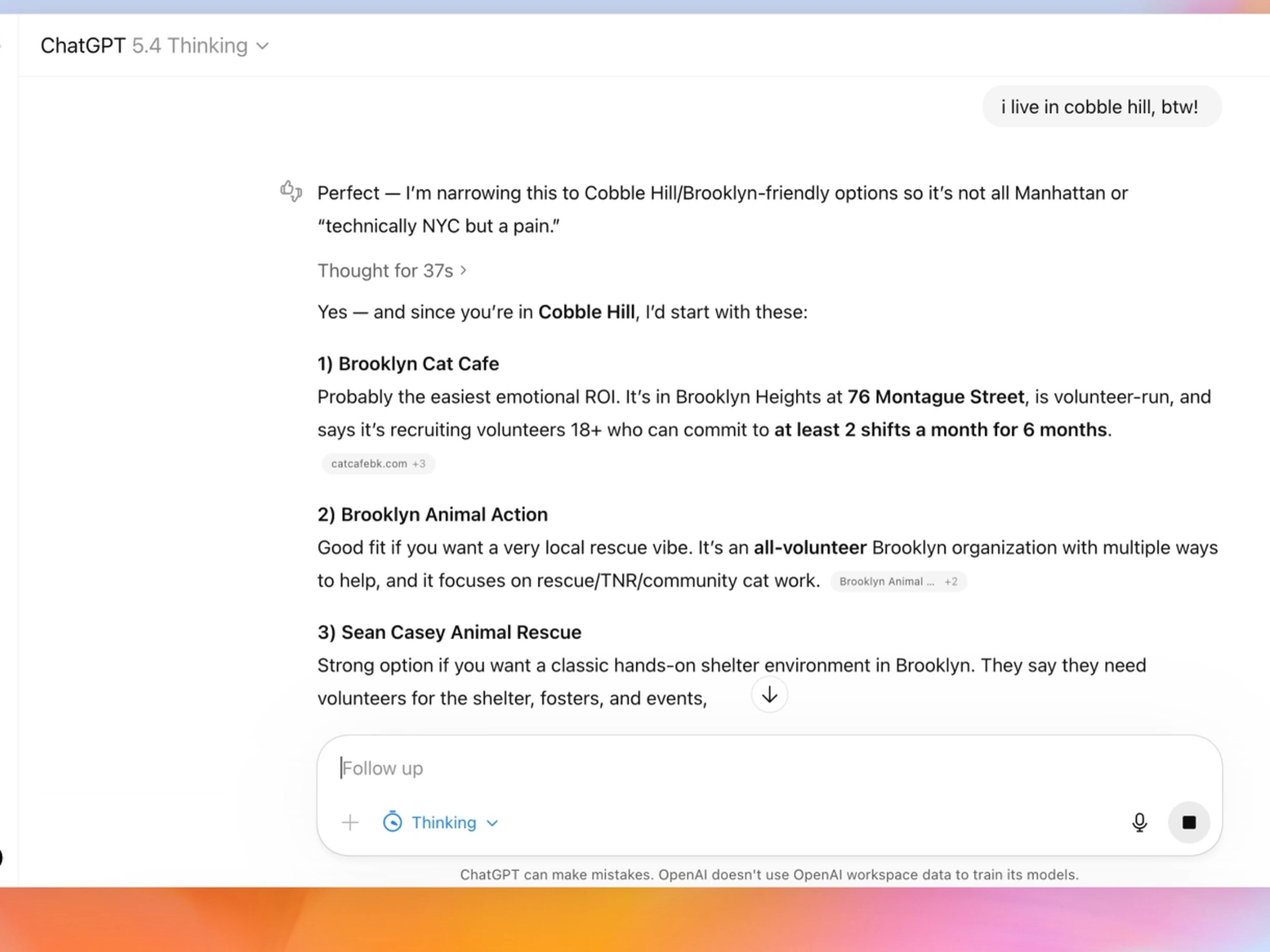
o3 was retired from ChatGPT on 26 Aug 2026 (its API snapshot shuts down 11 Dec), and reasoning depth is now a Thinking slider from Instant to Pro beside GPT-6 and GPT-5.6 Sol; Plus gets up to High, while Extra High and Pro need a Pro, Business or Enterprise plan. GPT-5.4 Thinking added a preamble that outlines its approach on longer, more complex requests and can be redirected mid-response, and OpenAI's launch demo shows it above a "Thought for 37s" line. GPT-6 can also start answering while it is still thinking. OpenAI does not expose raw reasoning tokens (its API returns a summary at most), and its current help pages do not say whether GPT-6 keeps the timed Thinking line.
Visit OpenAI ↗
DeepSeek Thinking Mode
DeepSeek
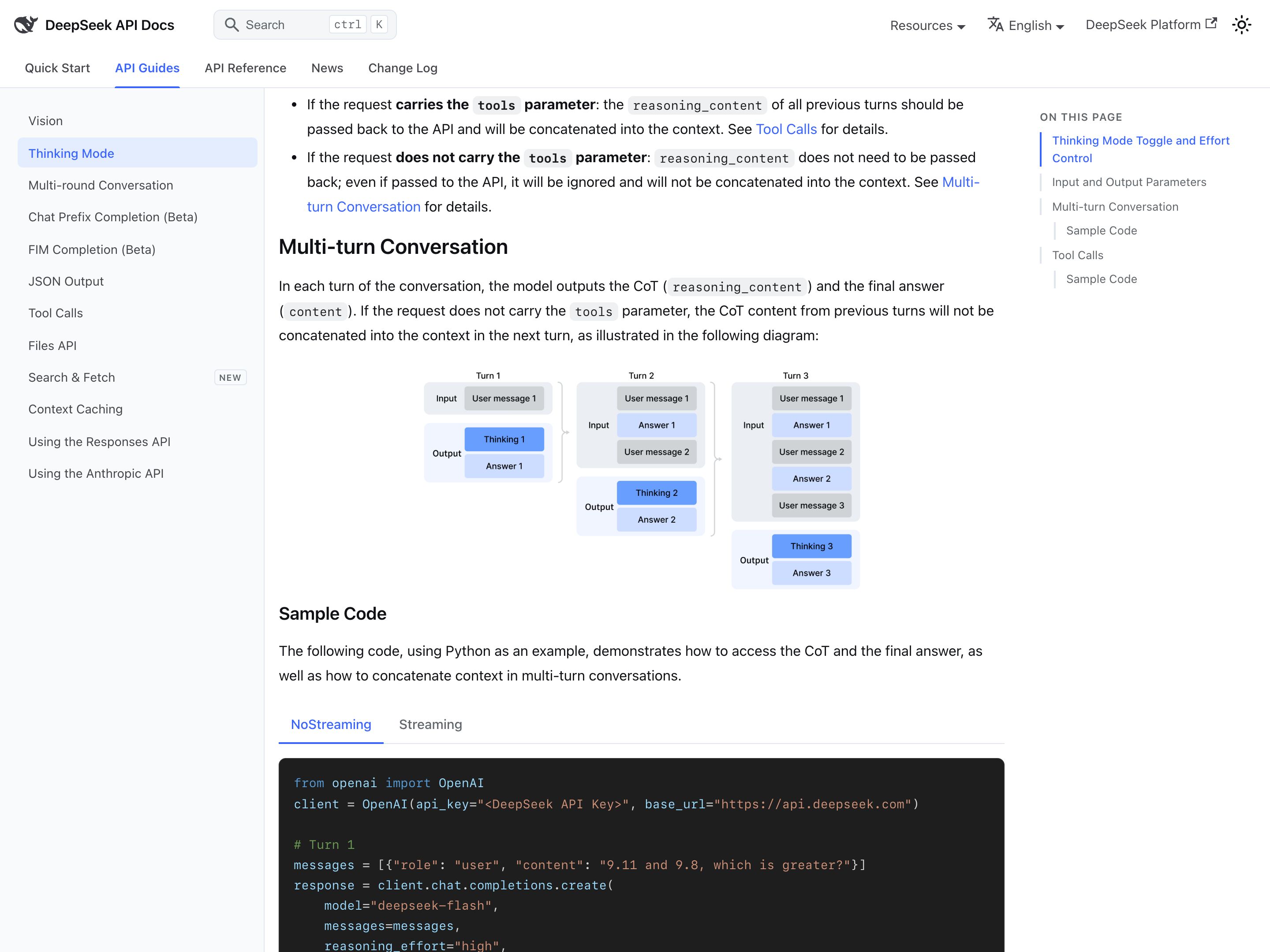
Thinking is a mode of both current API models, on by default at high effort, with low / high / max as the levels; in the chat app the switch is called DeepThink. DeepSeek's docs say the API returns the model's chain of thought as reasoning_content, next to the answer, and that a requested summary is accepted but none is generated. Claude and ChatGPT show summaries; here you get the full text, though as one block, not a structure you can navigate. deepseek-reasoner, the API name R1 launched under, ran newer hybrid models from Aug 2025 until its retirement on 24 Jul 2026.
Visit DeepSeek ↗
Research Frame
Why this pattern exists, and where it breaks.
Expose claims, assumptions, and inferences as navigable structure.
Flat answers collapse reasoning into one authoritative-sounding response.
Displayed reasoning is typically a post-hoc rationalization, not the model's faithful process (NNGroup 2025) — treat the trace as a checkable claim structure, never as proof, and pair it with sources.
Common questions
What people ask about this pattern.
When should I use the Reasoning Trace pattern?
+
Conclusions need to be challengeable — research, decisions, audits — not just produced.
When should I avoid the Reasoning Trace pattern?
+
The task is lightweight and explanation cost exceeds decision cost — or the reader is not answerable for the result and cannot evaluate the chain, where visible machinery reads as instability rather than rigor.
What problem does Reasoning Trace solve?
+
Users cannot challenge conclusions they cannot inspect.
Why is chat the wrong fit for this?
+
Flat answers collapse reasoning into one authoritative-sounding response.
Grounded in Research
Not just opinion.
The papers, guidelines, and usability studies this pattern rests on.
Saleema Amershi et al.
Microsoft Research · 2019 · refreshed 2026-07
The canonical 18-guideline taxonomy for human-AI interaction. Strongest anchors: G9 efficient correction, G11 why-did-it-do-that, G17 global controls. Its three zero-coverage guidelines — G6 bias mitigation, G14 cautious updates, G18 change notification — became this library's Bias Flag and Model Changelog patterns in July 2026. Nearly the whole Agent Workflow category sits outside its 2019 single-assistant frame.
Caleb Chan
Nielsen Norman Group · 2025
Recommends against exposing step-by-step reasoning as a trust mechanism: displayed traces are typically post-hoc rationalizations, not the model's faithful process — lean on sources and stated limitations instead. Directly sharpened reasoning-trace's risks framing.
Related Patterns
Curated connections, not just neighbors.
Hand-picked relationships — what this pattern pairs with in practice, what it replaces, what it builds on, and what builds on it.
Often paired with
Confidence Signals
Confidence Signals mark how sure each claim in the answer is; Reasoning Trace opens the assumptions behind the weak ones.
Often paired with
Citation Trail
Reasoning Trace shows how each claim was reached; Citation Trail links it back to the source span it came from.
Often paired with
Intent Preview
Intent Preview shows the planned steps before the agent acts; Reasoning Trace opens the logic behind its conclusions afterwards.