Critical generation controls are hidden behind syntax and recall.
← Back to patterns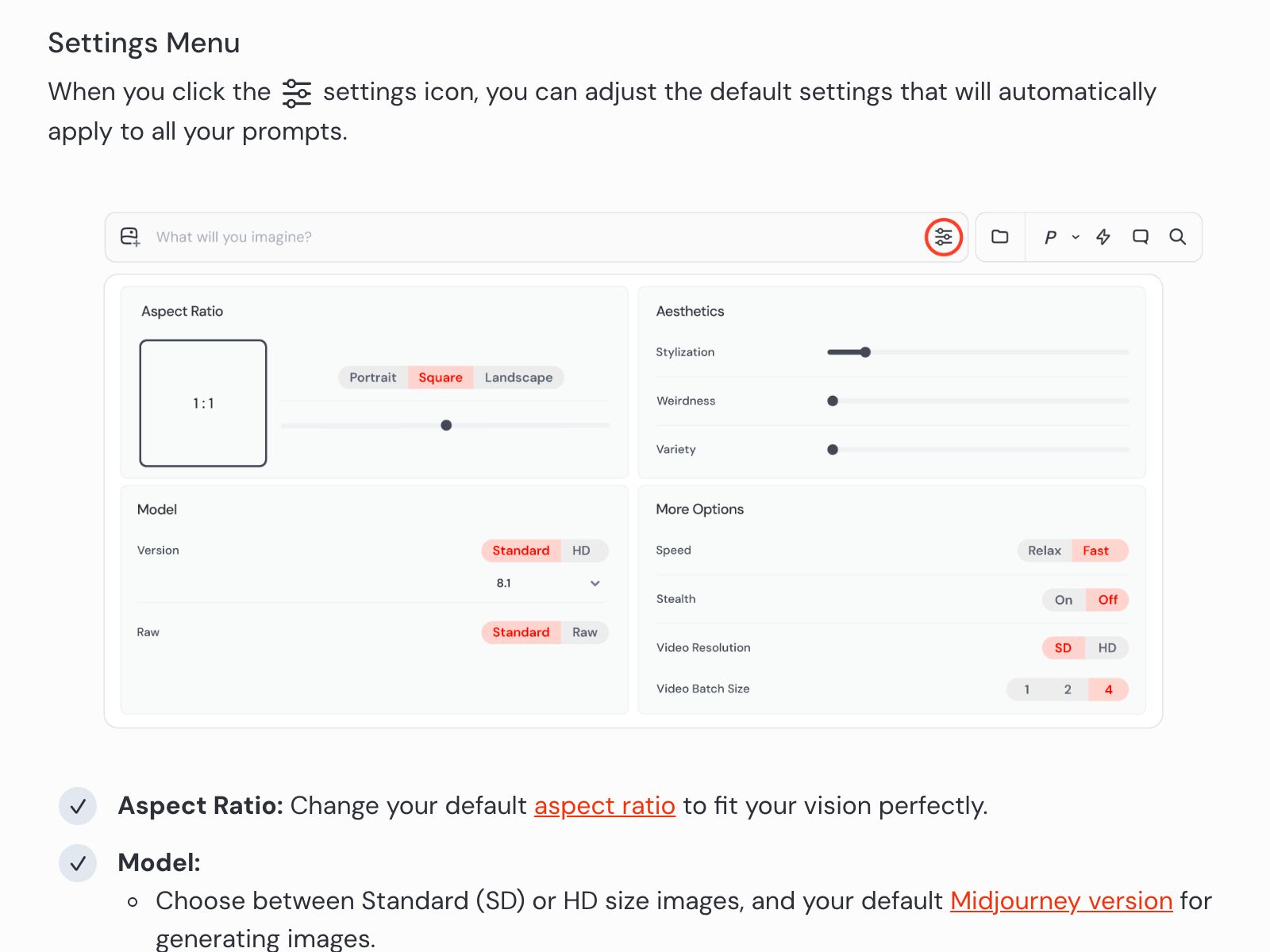
Direct Manipulation: A Step Beyond Programming Languages
Inline & Contextual
Property Panel
Deterministic Control for Probabilistic Machines
Instead of typing "--ar 16:9 --stylize 500" into a chat, the Property Panel brings back classic GUI elements to steer AI parameters. The text prompt describes the content, the panel controls the form.
Metaphor
Cockpit
Interaction
Parametric, Sliders
Use case
Image Generation, Fine-Tuning, Style Definition
Failure mode
Linear History
Control mechanisms
Sliders · Toggles · Presets
Reference examples
Midjourney Web · Adobe Firefly · Runway ML
Interactive Example
The live side-by-side is the comparison.
This prototype already contains the contrast between chat and the pattern response. It stands as the primary comparison surface for this page.
Same model. Same task. Different interface.
The chat version makes the user recall every parameter from memory — tone, length, hook style, hashtags — and restate all of them as one long instruction every time something changes, hoping the model reads it the same way twice.
The Property Panel turns those into visible, labelled controls beside the prompt: the text describes the content, the panel sets the form. The same move works wherever the knobs are finite — a LinkedIn post's tone and length here, or an image model's `--ar 16:9 --stylize 500` — every value stays readable, repeatable, and explained before you touch it.
This is Nielsen's Recognition over Recall: don't make users remember syntax the interface could show them.
DOPE Lens
How this pattern improves AI interaction quality.
Observability
The full configuration — tone, length, hook style, CTA, hashtag count — reads at a glance as labeled controls, not archaeology through prompt history
Directability
Content stays in the prompt, form moves to controls: length is a slider, tone a select, CTA a toggle — each adjustable without rewriting a sentence
Predictability
Each control maps to one line of the compiled prompt, which updates live as you adjust — you see exactly what will be sent before it is sent
Explainability
Every control carries its name, range, and current value inline, so what a setting does is read off the label, not reverse-engineered from output diffs
Fit
Where it earns its place.
Use it
when
when
Users repeatedly tune the same generation parameters and need precision over speed.
Avoid
when
when
The task is still open-ended exploration and precision controls would slow discovery.
In the wild
Where this pattern already ships.
Real implementations from products users already know. Each entry shows how the pattern got applied — what shipped, where it sits in the product, what it traded off.
Midjourney Web
Midjourney
Aesthetics drawer beside the prompt — Stylization (0–1000), Weirdness, Variety as sliders. Every value visible, every value reproducible.
Visit Midjourney ↗
Adobe Firefly
Adobe
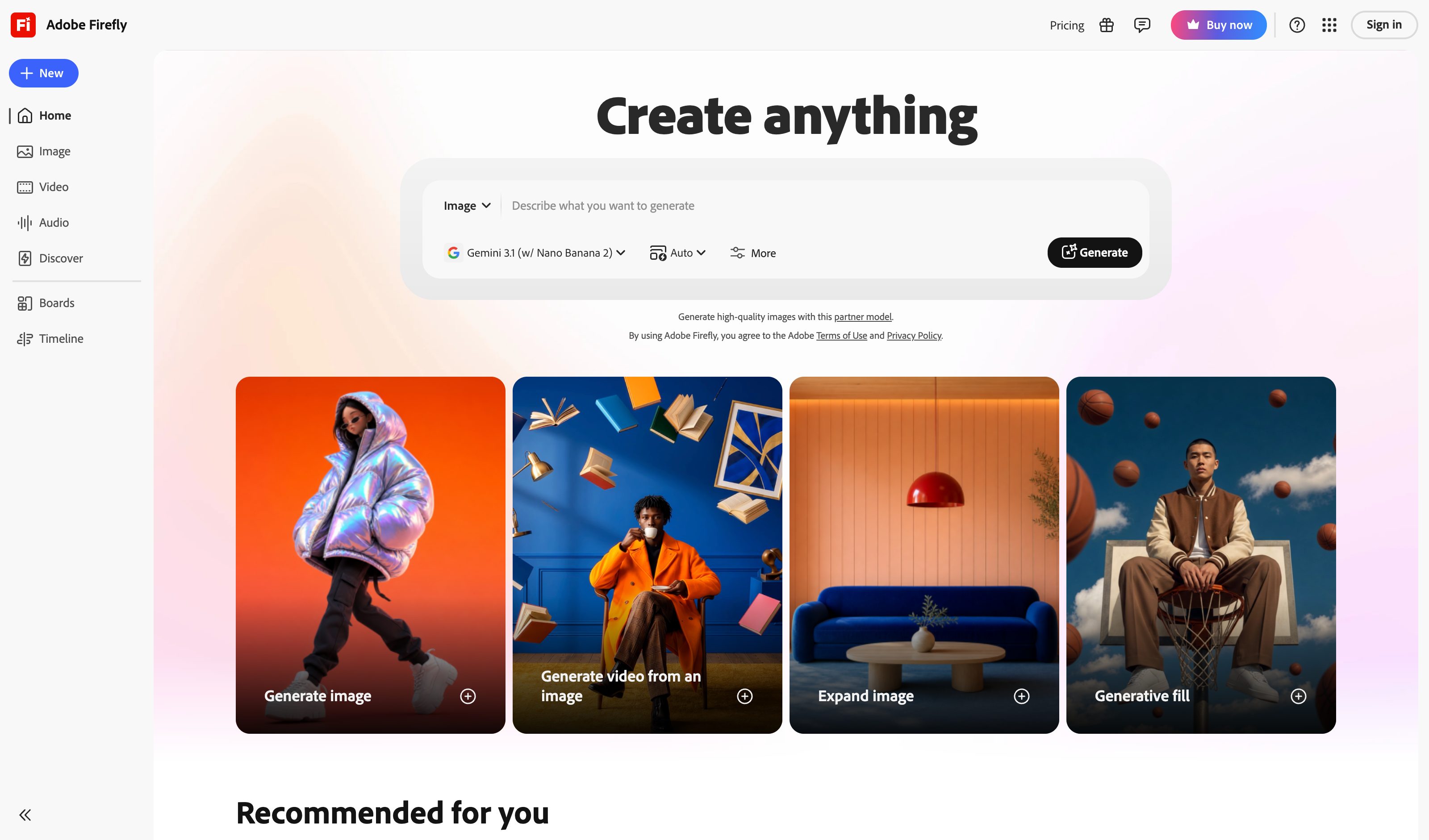
Right-rail panel with aspect ratio, content type, content class, style references, structure references, lighting, composition, color & tone — all GUI controls, prompt focuses on subject.
Visit Adobe ↗
Runway ML
Runway
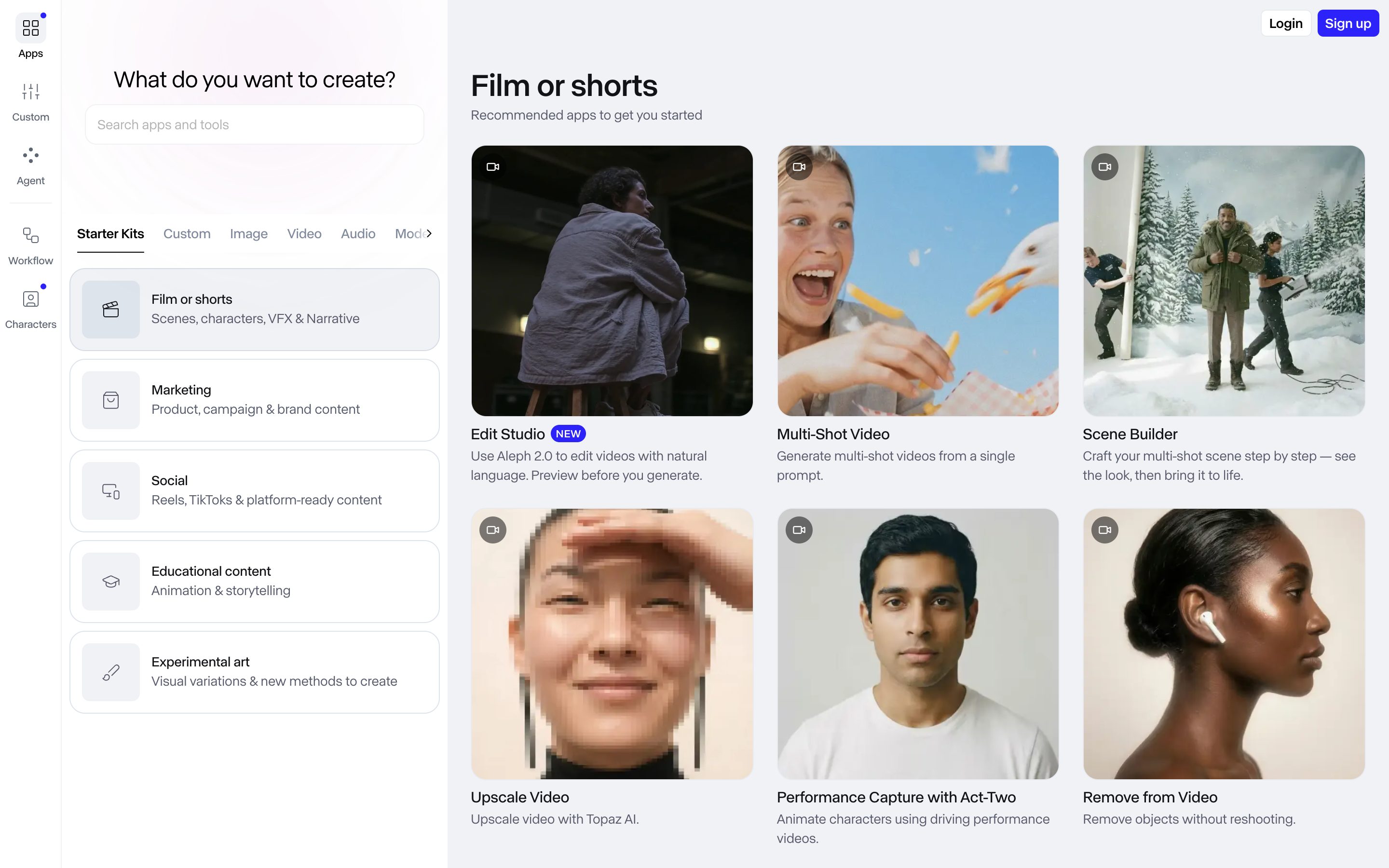
Gen-4 generation panel exposes Duration, Resolution, Fixed-Seed slider, Reference image controls — chat would need eight parameters on one line.
Visit Runway ↗
Research Frame
Why this pattern exists, and where it breaks.
Expose stable model parameters as visible GUI controls beside the prompt.
Chat forces users to remember parameter names, ranges, and magic words.
Too many controls can recreate cockpit overload if defaults and grouping are weak.
Common questions
What people ask about this pattern.
How is a Property Panel different from chat-based parameter setting?
+
A Property Panel exposes parameters as durable GUI controls — sliders, toggles, presets — instead of magic strings inside a prompt. The panel is the source of truth, the prompt describes content, and the user never has to remember syntax to reproduce a result.
When should I avoid using a Property Panel?
+
Avoid panels when the task is open-ended exploration where premature precision controls slow discovery. If users do not yet know what knobs matter, a panel encodes assumptions that lock in too early.
How does this affect AI predictability?
+
Saved presets produce repeatable outputs because every parameter is explicit and persisted. The user can return to a known-good configuration without rebuilding it from prose.
Grounded in Research
Not just opinion.
The papers, guidelines, and usability studies this pattern rests on.
Ben Shneiderman
IEEE Computer · Vol. 16, Iss. 8 · 1983
The original case for visible, continuous, reversible direct manipulation over command-line abstraction. The patterns that move from prose-prompt to controllable surface are this argument applied to LLM I/O.
Related Patterns
Curated connections, not just neighbors.
Hand-picked relationships — what this pattern pairs with in practice, what it replaces, what it builds on, and what builds on it.
Often paired with
Inline Prompt Controls
The Property Panel holds stable settings beside the prompt; Inline Prompt Controls make the values written in the prompt clickable.
Often paired with
Progressive Disclosure
Progressive Disclosure folds advanced controls behind expansion, so a growing Property Panel avoids cockpit overload.
Alternative to
Tone of Voice
Tone of Voice sets style with one drag on a 2D pad, where a Property Panel gives each setting its own control.