Instead of iterating one output at a time through chat, the AI generates 3 distinct alternatives simultaneously. You compare, pick, or blend. One selection replaces five chat turns of "make it more casual... actually shorter... can you try a different angle?"
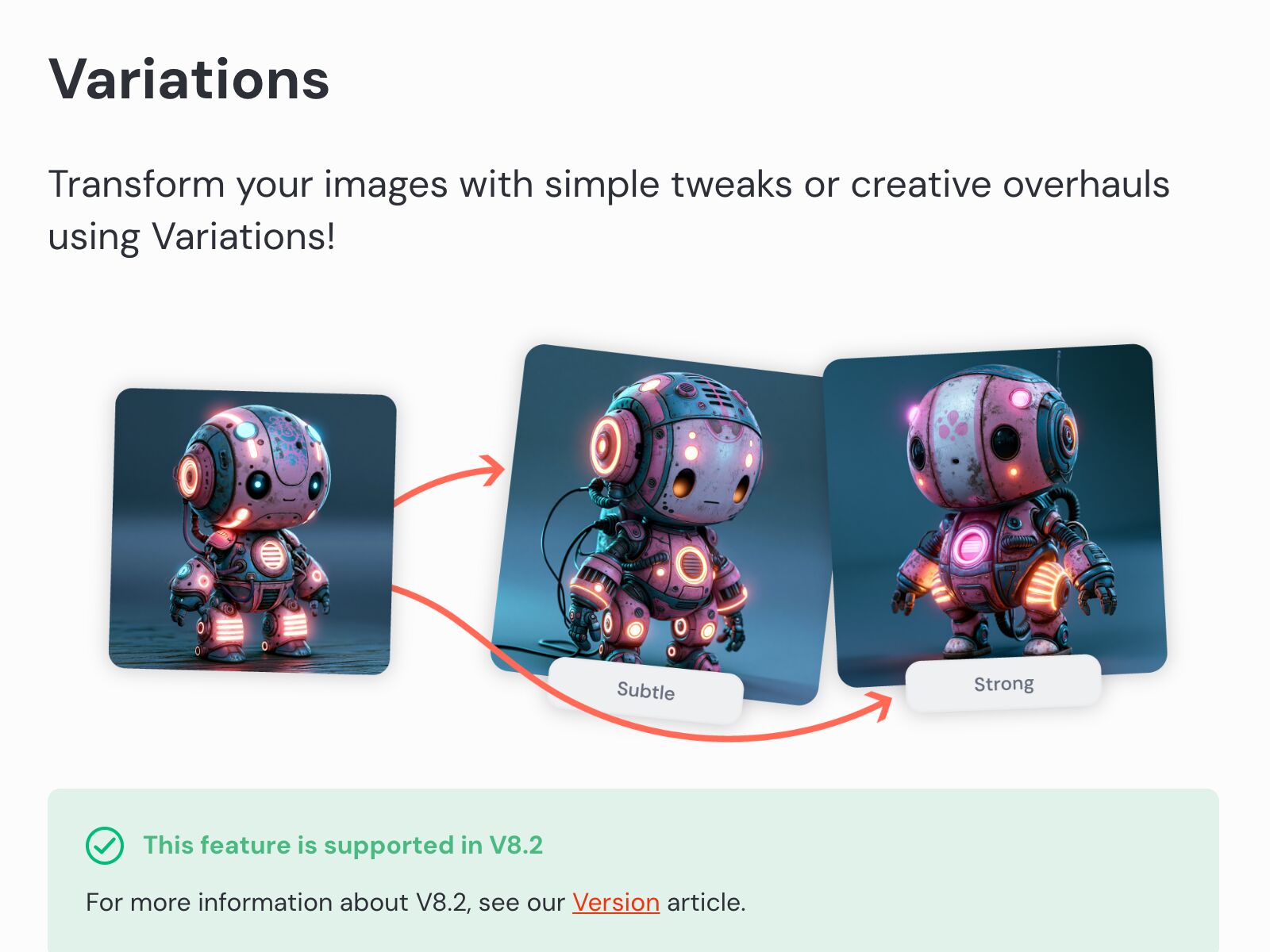
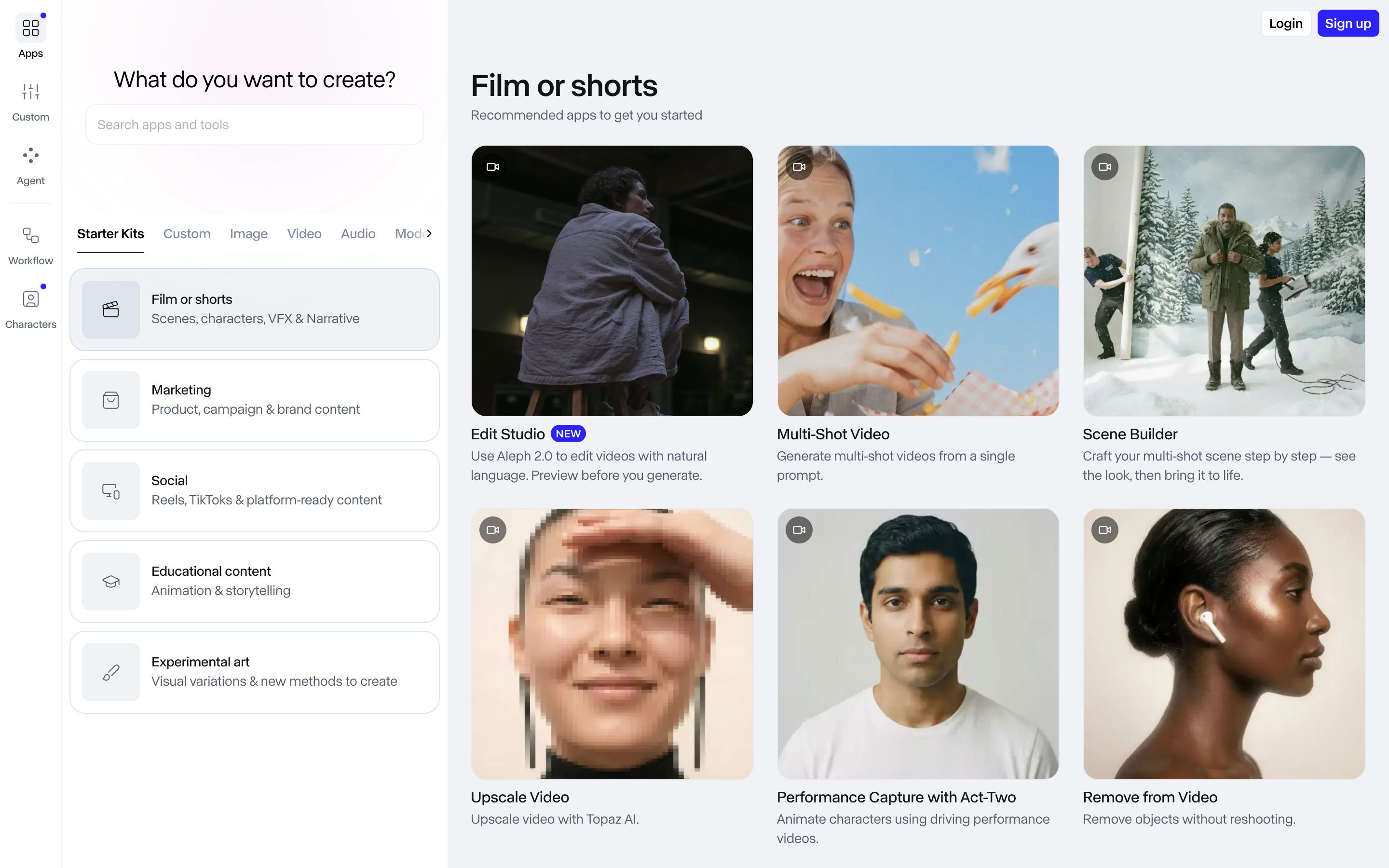
Midjourney Grid · Suno Song Versions · Adobe Firefly Variants · Google Stitch · Runway Gen-4 Image · Cursor /best-of-n
Concept Frame
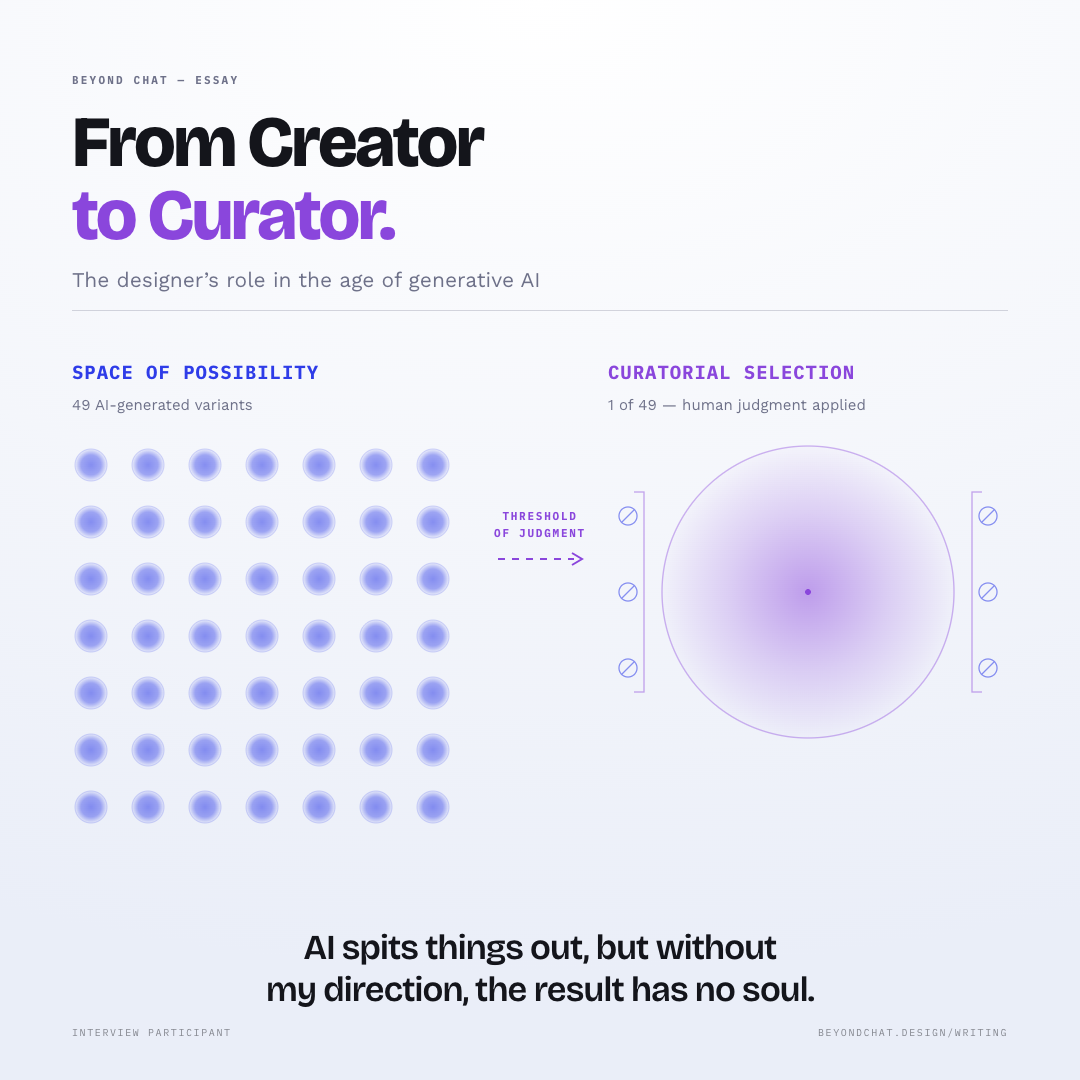
From creator to curator.
Generative AI compresses the cost of producing variants — so the work shifts from drawing each option to choosing among many. Parallel Alternatives is the surface that makes that selection itself the design move.
From the Essay
AI spits things out, but without my direction, the result has no soul.
This prototype already contains the contrast between chat and the pattern response. It stands as the primary comparison surface for this page.
Loading Demo
Preparing the interactive example for this pattern.
✦
Five chat turns of refinement. Or one decision.
When users are still searching the space, serial iteration is the wrong shape. Each turn of "make it more casual, actually shorter, try a different angle" commits to one direction before the alternatives have been seen. Chat narrows exploration too early, spending turns to creep toward an option a comparison would have surfaced at once.
Parallel Alternatives generates three distinct candidates side by side, each labeled with its approach, tone, and length. The user compares, picks, or blends in a single move, replacing iteration with selection. Choosing precedes refining, so the search happens where the options are all visible rather than one regret at a time.
It is faster to recognize the right direction among three than to iterate toward it one turn at a time.
DOPE Lens
How this pattern improves AI interaction quality.
Observability
All alternatives visible simultaneously — no serial scrolling
Directability
Select, blend, or regenerate any variant independently
Predictability
Each alternative has a labeled approach, tone, and length
Explainability
Each alternative's tone, approach, and length rationale are labeled
Fit
Where it earns its place.
Use it when
Users are still searching the solution space and one answer narrows it too early.
Avoid when
A single high-confidence answer is preferable to divergent exploration.
In the wild
Where this pattern already ships.
Real implementations from products users already know. Each entry shows how the pattern got applied — what shipped, where it sits in the product, what it traded off.