Plan reviews are read-only; users cannot fix the plan, only argue with it.
← Back to patterns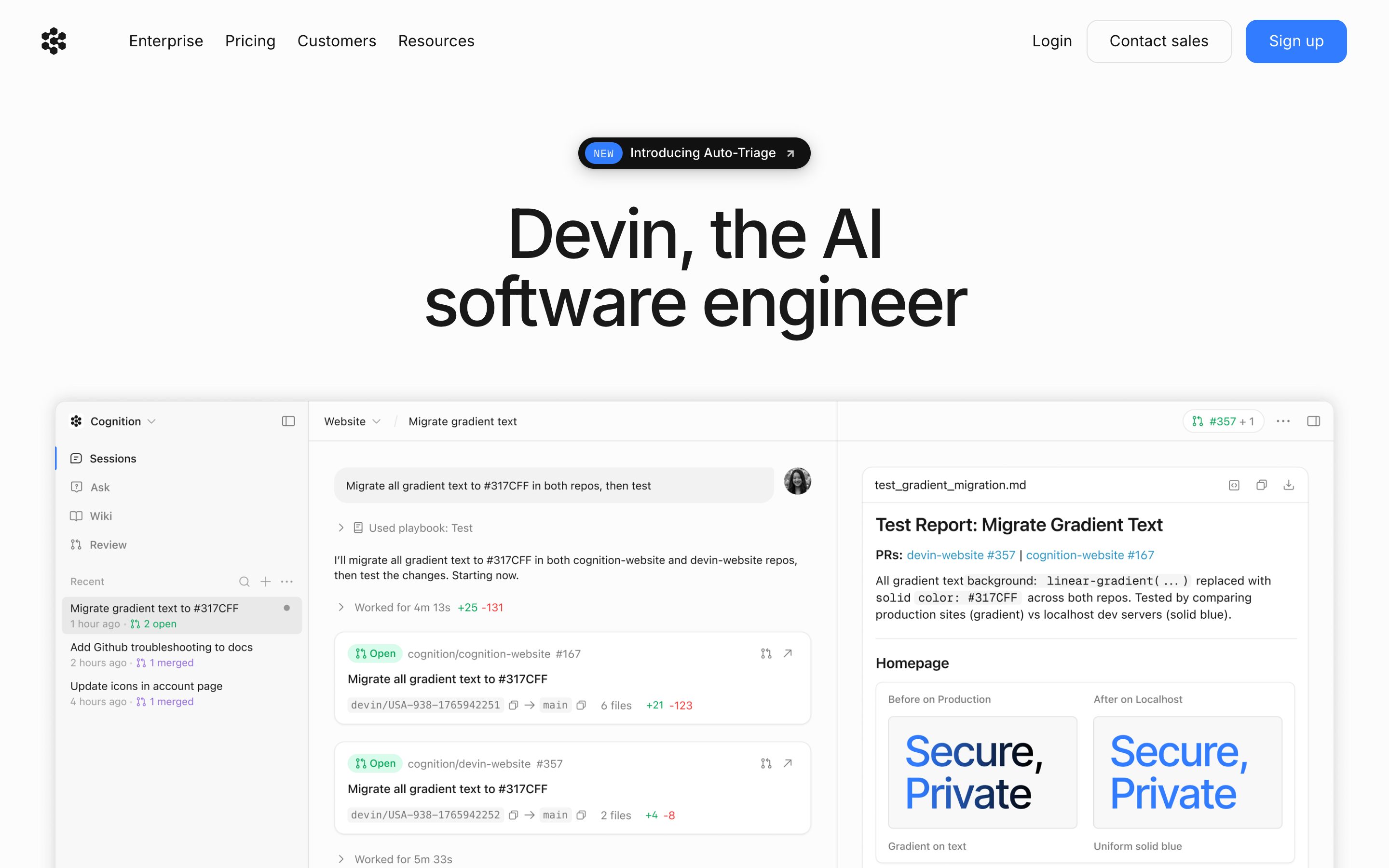
Cocoa: Co-Planning and Co-Execution with AI Agents Magentic-UI: Towards Human-in-the-Loop Agentic Systems
Agent Workflow
Editable Plan
Plan-as-Document Before Execution
Before the agent runs, its plan is a document you can edit. Add steps, remove steps, change order, leave comments. Execution starts only after the plan is yours, not the model’s.
Metaphor
Working Draft
Interaction
Edit, Reorder, Annotate
Use case
Agentic Workflows, Multi-step Tasks, Research Plans
Failure mode
Weak Intervention
Control mechanisms
Step Editor · Reorder Handles · Inline Comments · Approve
Reference examples
Devin Interactive Planning · Manus Plan Mode · Replit Agent Plan · Copilot Coding Agent Plan
Interactive Example
The live side-by-side is the comparison.
This prototype already contains the contrast between chat and the pattern response. It stands as the primary comparison surface for this page.
Reviewing a plan is not the same as owning it.
Chat-based plan review is read-only by nature. The agent proposes ten steps in prose and your only move is to argue back in more prose, hoping the model re-derives the plan you actually wanted. You can object to the plan but you cannot touch it — and step seven is still wrong on the second draft.
Editable Plan renders the plan as a structured document you add to, reorder, prune, and annotate before execution, and edits stick — the agent runs the plan you signed off on. Authorship moves from the model to the user, so kickoff carries the accountability of a signature, not the passivity of approval. The plan is yours before any irreversible work begins.
The difference between supervising an agent and commanding one is whether you can edit the plan or only comment on it.
DOPE Lens
How this pattern improves AI interaction quality.
Observability
The full plan is visible as a structured document, not buried in chat
Directability
Add, remove, reorder, or annotate any step before kickoff
Predictability
Edits stick — the agent runs the plan you signed off on
Explainability
Each step shows its rationale, expected output, and risk class
Fit
Where it earns its place.
Use it
when
when
Plans for agents are long enough that arguing in chat costs more than direct editing.
Avoid
when
when
The plan is too small to warrant a document or too rigid to benefit from edits.
In the wild
Where this pattern already ships.
Real implementations from products users already know. Each entry shows how the pattern got applied — what shipped, where it sits in the product, what it traded off.
Devin Interactive Planning
Cognition
Devin 2.0 lets users modify the plan before letting the agent work autonomously; plan acts as inspectable starting point with dynamic re-planning during execution.
Visit Cognition ↗
Manus Plan Mode
Manus
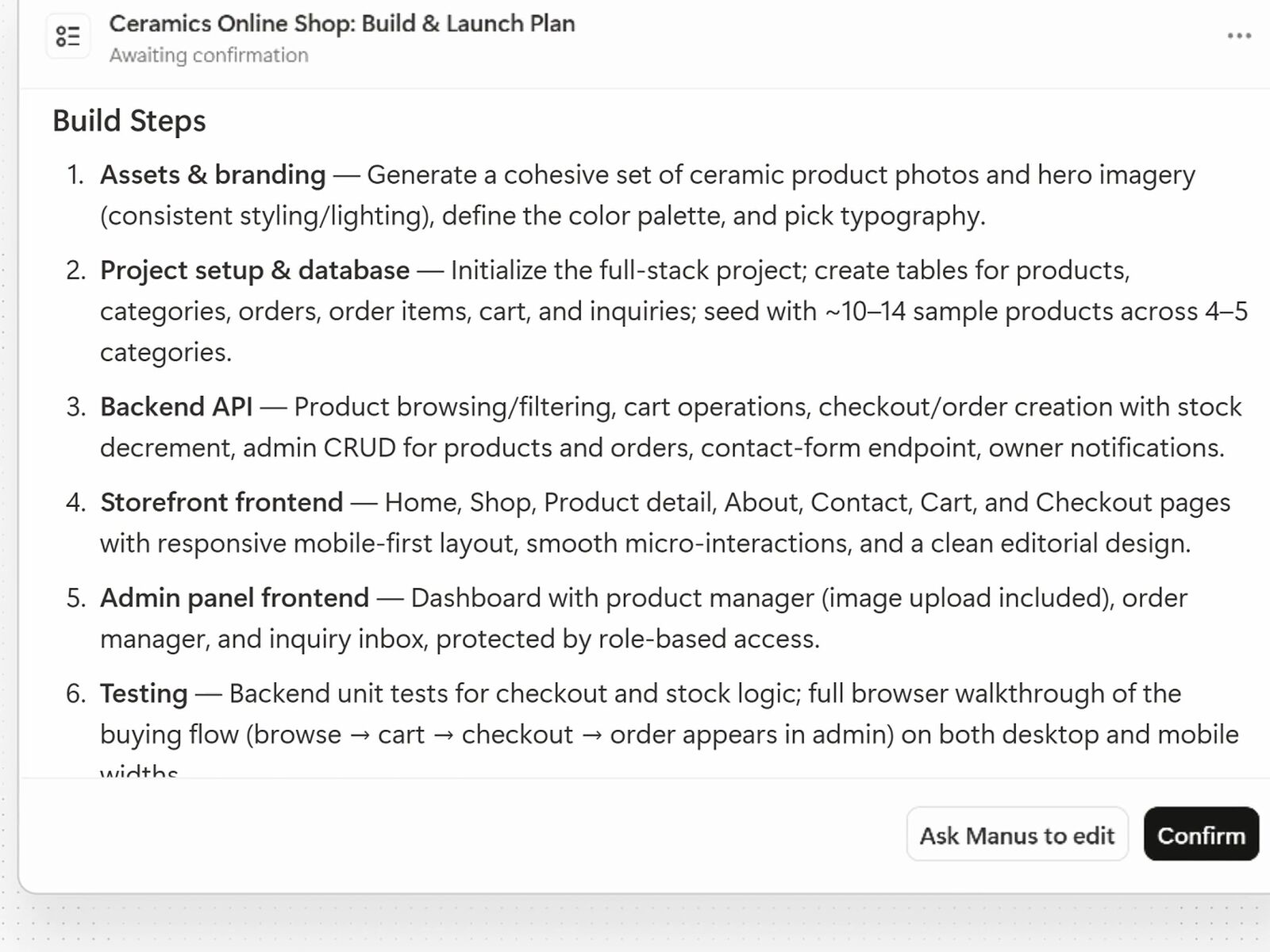
Plan Mode (July 2026) writes the plan as a Markdown document — goal, assumptions, numbered build steps — marked "Awaiting confirmation". Click in and rewrite any of it, or use Ask Manus to edit; nothing gets built until you Confirm or dismiss the plan, and switching Plan Mode on mid-task plans the next phase the same way.
Visit Manus ↗
Replit Agent Plan
Replit
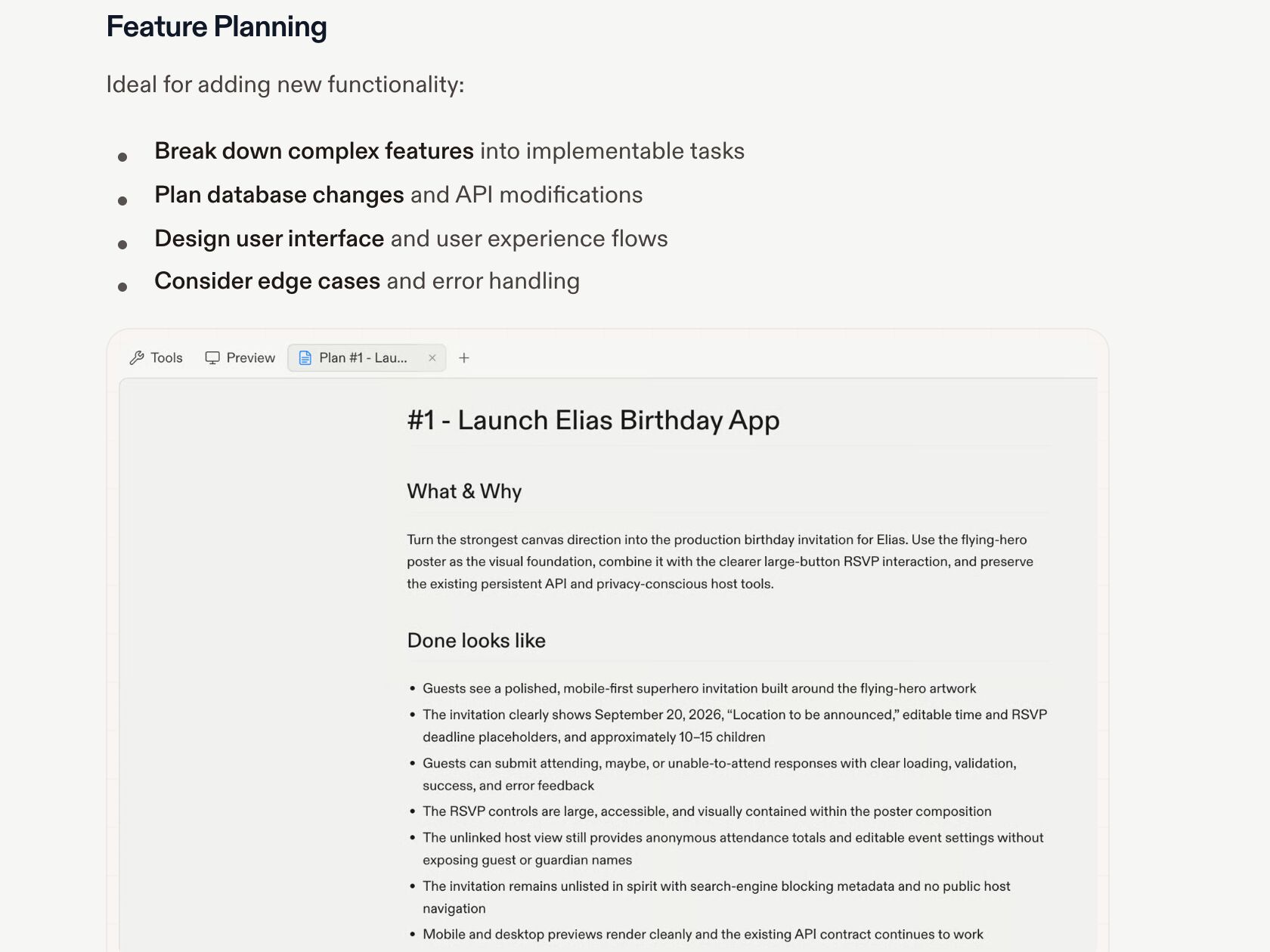
Each task in the plan opens as its own document — What & Why, Done looks like — to review before Build here or Build in background. Revise sends the plan back for another round; the docs describe refining it through Agent, not editing a task in place.
Visit Replit ↗
Copilot Coding Agent Plan
GitHub
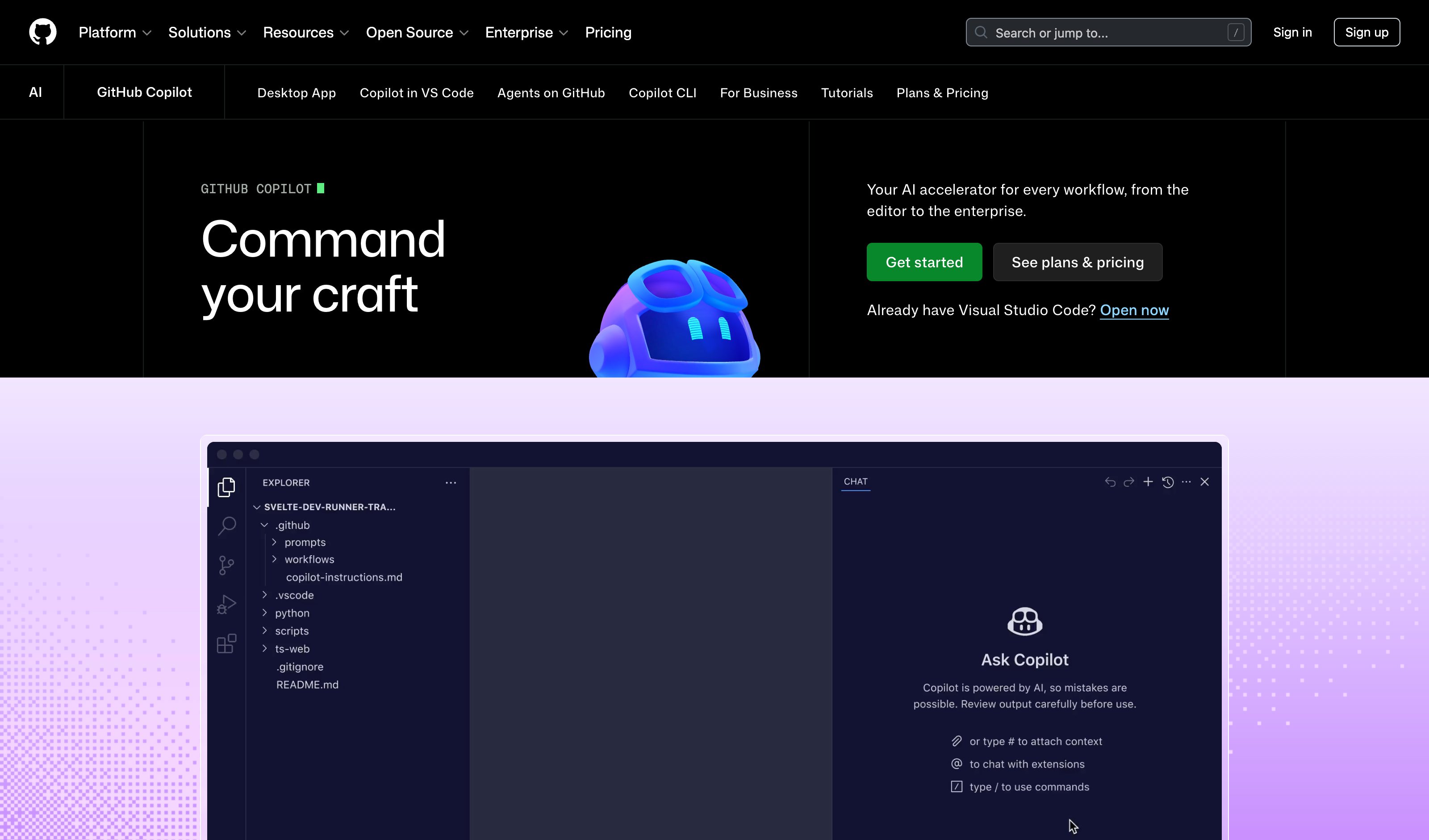
Spec (current vs desired) and plan (which files change, how) are editable in natural language before any code is written. The successor lineage to the sunset Copilot Workspace.
Visit GitHub ↗
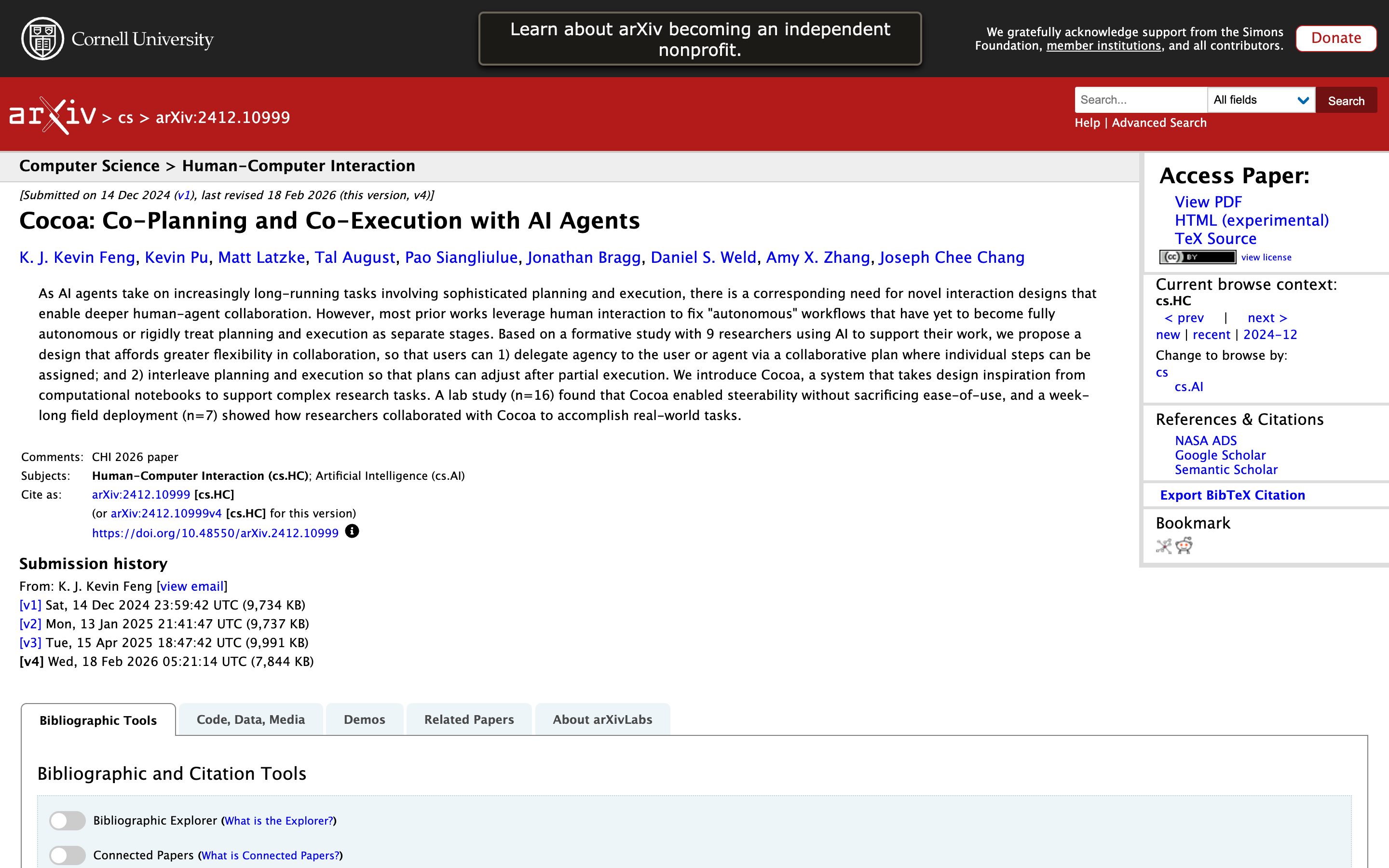
Cocoa: Co-Planning and Co-Execution with AI Agents
Academic source · Feng, Pu, Latzke et al. (Allen AI + UW, Dec 2024)
Research argument for keeping the plan editable *through* execution — not just before it. Editable Plan is the pre-execution surface; the paper's contribution is co-execution, which is broken out into the separate Live Plan Surface pattern.
Visit Academic source · Feng, Pu, Latzke et al. (Allen AI + UW, Dec 2024) ↗
Research Frame
Why this pattern exists, and where it breaks.
Render the plan as an editable document users sign off on before execution.
Chat-based plan review forces users to negotiate edits in prose instead of editing directly.
Editable plans can lull users into rubber-stamp approval if structure is weak.
Common questions
What people ask about this pattern.
When should I use the Editable Plan pattern?
+
Plans for agents are long enough that arguing in chat costs more than direct editing.
When should I avoid the Editable Plan pattern?
+
The plan is too small to warrant a document or too rigid to benefit from edits.
What problem does Editable Plan solve?
+
Plan reviews are read-only; users cannot fix the plan, only argue with it.
Why is chat the wrong fit for this?
+
Chat-based plan review forces users to negotiate edits in prose instead of editing directly.
Grounded in Research
Not just opinion.
The papers, guidelines, and usability studies this pattern rests on.
K. J. Kevin Feng, Kevin Pu, Matt Latzke, Tal August, Pao Siangliulue, Jonathan Bragg, Daniel S. Weld, Amy X. Zhang, Joseph Chee Chang
Allen Institute for AI + University of Washington · 2024 · refreshed 2026-02
Mixed-initiative framework where humans and AI flexibly share planning *and* execution. Co-planning beats both full automation and full manual on outcome quality and user trust.
Hussein Mozannar, Gagan Bansal, Cheng Tan, Adam Fourney, Victor Dibia, Jingya Chen et al.
Microsoft Research · 2025
Concrete system for human-in-the-loop agentic workflows: co-planning, per-action-class guardrails, intervention mechanisms. Practical UI patterns for agentic oversight.
Related Patterns
Curated connections, not just neighbors.
Hand-picked relationships — what this pattern pairs with in practice, what it replaces, what it builds on, and what builds on it.
Often paired with
Intent Preview
Intent Preview shows each step's risk, affected files, and scope, so you know which steps to edit before signing off.
Often paired with
Supervisor-Worker
Edit the supervisor's task breakdown as a plan before kickoff, then review each worker's piece on its own.